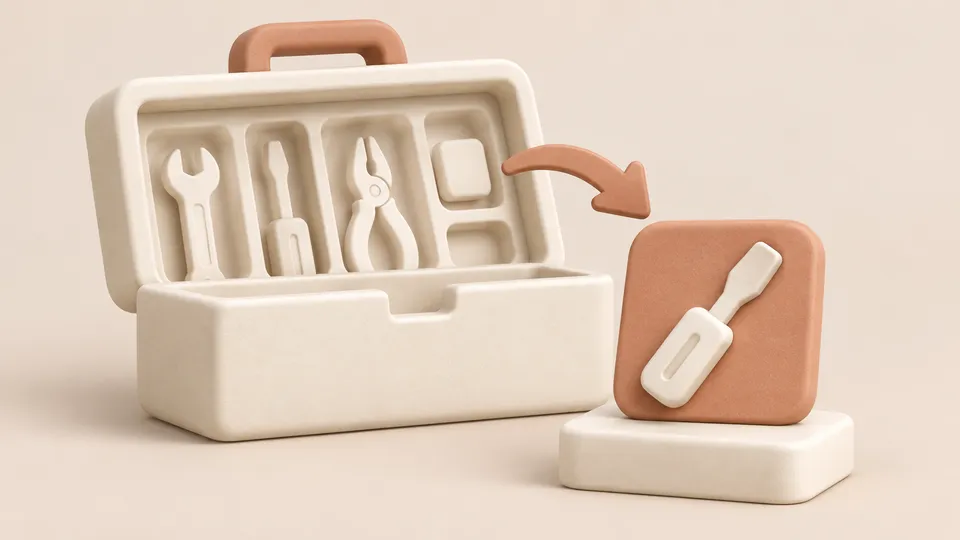
Large applications are good at holding many workflows. They are not always good at making one small job feel obvious.
A focused tool can start with the thing a person already has—a file, a block of text, or an AI-generated result—and keep the next action visible. There is less navigation to learn, fewer settings to interpret, and a smaller gap between intent and result.
The interface should match the size of the job
When a task takes a minute, the interface should not require a ten-minute tour. That does not mean hiding important limits. It means putting the main action first and moving explanations, safeguards, and optional controls into the places where they become relevant.
At IILL, we use three questions to review a small tool:
- Can a first-time visitor identify the input and the result without a guide?
- Can the task be completed with a keyboard and without a drag gesture?
- Does the interface state what happens to the visitor’s data?
These questions are more useful than counting features. A tool with fewer features can still be more capable when its boundaries are clear.
Small does not mean incomplete
A narrow tool still needs accessible controls, helpful errors, responsive layout, and honest privacy language. The difference is that these qualities support one workflow instead of compensating for a sprawling one.
That is the IILL approach: make the path short, keep the limits visible, and let the result do the explaining.